
Quick answer: when should you choose a CNC machined heat sink?
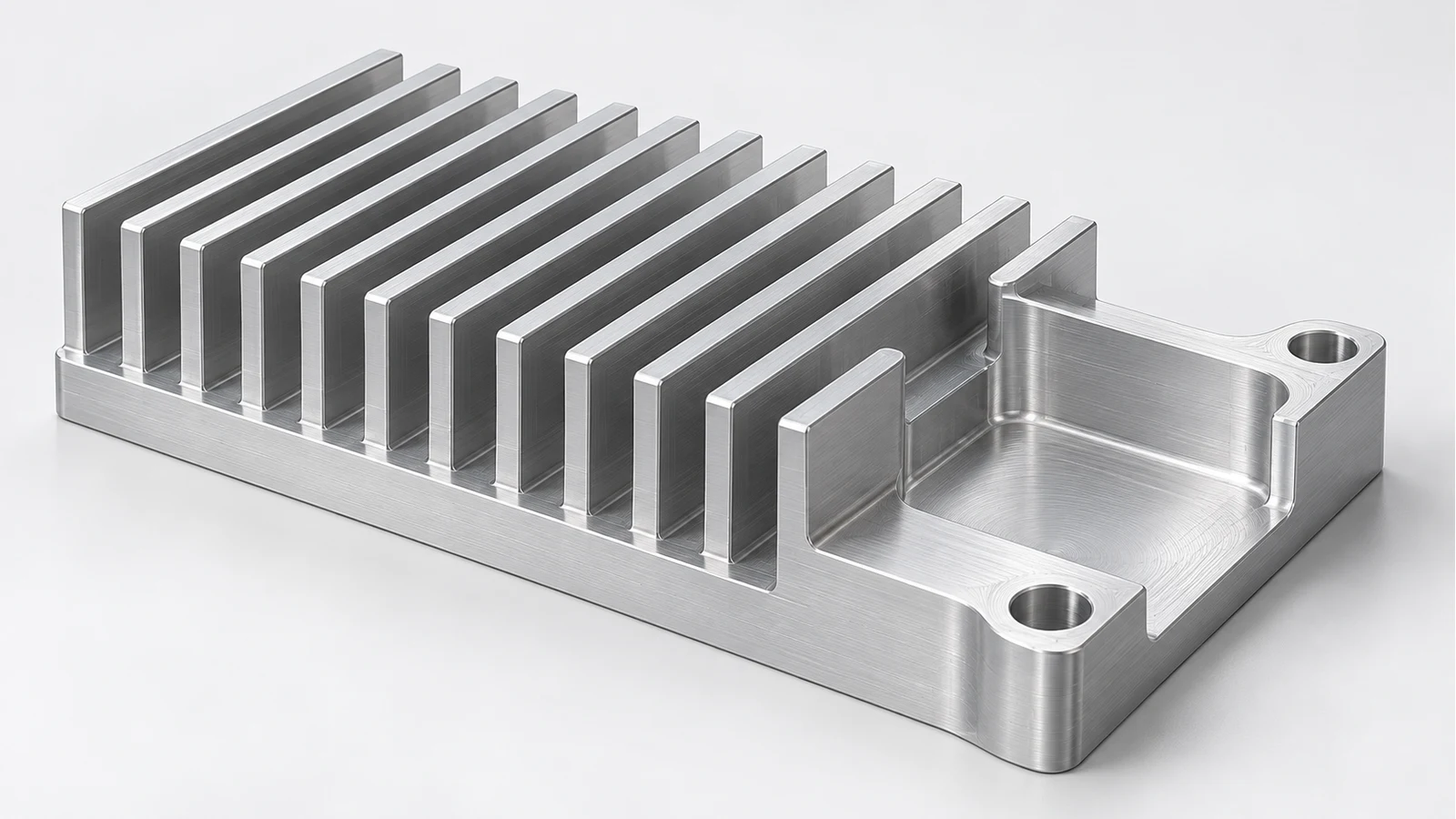
Choose a CNC machined heat sink when the heat-source contact, mounting features or clearance geometry need a custom finished shape. BAOSONG recommends machining from solid for localized three-dimensional features that a suitable profile cannot provide efficiently. Where preformed fins already meet the design, retain them and machine the interfaces. Aluminum combines a heat-conducting body with low weight and integrated mounting features.
We plan the usable component, including repeat orders. Our manufacturing proposal brings together the blank, contact surfaces, hole locations, tool access, finishing and acceptance records. Approved drawings move directly to manufacturing review and quotation; new or revised designs receive specific geometry and process recommendations for approval.
Send your drawing, sample photo or a short project description. Request a custom aluminum heat sink proposal and quote. We will recommend the manufacturing route and help resolve the details needed for production.
At a glance: our recommendation for each project condition
| Project condition | BAOSONG recommendation | What you gain |
|---|---|---|
| The required local geometry cannot be obtained efficiently from a suitable preformed blank | Machine from solid, planning contact, clearance and mounting features together. | Custom geometry without a dedicated forming die. |
| A preformed fin section works, but the contact face and holes need customization | Keep the fins; use selective CNC for the required interfaces. | Avoid cutting useful fin geometry out of solid stock again. |
| Deep narrow channels or delicate fins complicate cutting | Review cutter reach, internal radii and support before releasing the geometry. | A feasible machining plan with specific changes for approval. |
| The heat sink seats poorly or holes do not match the assembly | Define the contact zones and common mounting references, then inspect those relationships. | Acceptance evidence for the features that control installation. |
| You need a recurring order or supplier transfer | Freeze the approved route and final part requirements; define change and first-article checks. | A repeat-order plan based on the accepted component. |
What you are buying: a finished thermal component
A custom machined aluminum heat sink may start as solid stock or as a suitable preformed blank. The purchasing requirement is the finished geometry: the contact face, fin envelope, clearance features, mounting holes and delivered surface state. The word “machined” does not require every fin to be cut from a solid block.
BAOSONG defines whether the order includes the finished body alone or an agreed mechanical assembly with specified fasteners or interface items. A fan module, heat-pipe assembly or liquid cold plate has a different supply scope. We identify purchased and customer-supplied items in the proposal so the part quotation matches what you need to install.
For the wider equipment context, see our aluminum hardware for AI servers. Power electronics heat sinks may have similar machining features, but device-level cooling and application-specific requirements remain separate from this manufacturing guide.
Why use aluminum, and which alloy should we start with?
Aluminum is a strong starting point when the component needs to conduct heat, remain light and combine contact, mounting and clearance features in one body. CNC machining gives those local features their required shape without separate brackets or spacers where an integrated design is appropriate. We preserve material where it carries heat or mounting loads and remove it where the assembly needs space.
For machining from solid, we consider 6061 aluminum when machinability and mechanical interfaces are priorities. Hydro’s 6061 guidance supports its suitability for machining and emphasizes selecting the temper for the intended service. Temper is the material’s specified treatment condition; the alloy number alone is not a complete material requirement.
A suitable extrusion route may instead favor 6063 for its forming and surface characteristics, as described in Hydro’s 6063 guidance. We do not substitute one alloy or temper for another on an approved drawing without your agreement. Product form, thermal requirements and finishing remain part of the decision.
For a concentrated heat source or a constrained air path, we review the contact and heat-spreading arrangement before recommending a material change. Aluminum remains useful for the finned body and structure. We select the spreading arrangement against the heat-source footprint, available air path and assembly requirements.
Machine from solid or retain a preformed fin section?
Use solid-stock CNC for geometry freedom; retain preformed fins when they already do the job. We select the route against the finished part and order pattern. A one-off order does not automatically require a new design, and a recurring order does not automatically require abandoning CNC.
| Route | When we recommend it | Tradeoff and change trigger | Release checks |
|---|---|---|---|
| Machined from solid | Local pockets, stepped pads or multiple mounting orientations cannot be obtained efficiently from a suitable preformed blank. Avoids a dedicated forming die. | Material removal, cutter reach and thin-feature support affect the route. Reconsider the blank when a stable repeated section can replace substantial fin cutting. | Tool access, internal radii, workholding, material state and finished feature relationships. |
| Preformed blank + selective CNC | Straight fins and base already satisfy the design; contact faces, holes, pockets or ends need customization. Includes extrusion plus CNC machining. | The existing section constrains the finished shape. Change route if local cutting destroys useful fins or cannot preserve the required base and interfaces. | Blank suitability, machining allowance, inherited variation, reference surfaces and final inspection. |
| Suitable finished catalog part | Its geometry, mounting and verified cooling conditions already meet the project. No custom machining is needed. | Limited freedom to change interfaces or layout. Move to custom manufacture when fit or the specified operating conditions cannot be satisfied. | Exact model, installation compatibility, supply continuity and performance conditions. |
For extruded aluminum heat sinks that need a new section, our custom aluminum extrusion service addresses the profile and tooling decisions. Here, we concentrate on the features that CNC must finish. The proposal identifies the blank route, surfaces to retain, surfaces to machine and the agreed records for the finished component.
Check the cutter path before approving narrow fins and pockets
A deep channel may look straightforward in CAD but require a long, slender cutting tool. Tool access means the cutter and its holder can reach the feature without collision while the part remains securely supported. During manufacturing review, we check entry direction, reach, room for internal radii and access for removing chips.
The Protolabs Network CNC design guide explains that cutter geometry produces internal radii, extended reach can increase vibration, and thin walls reduce stiffness. We review the proposed heat sink against its actual geometry, material, cutting approach and inspection requirements.
- Identify which fins, channels and pockets actually need cutting. Retain usable preformed geometry where that reduces unnecessary operations.
- Review the cutter and holder path. If a corner or deep channel is inaccessible, propose a larger radius, a different approach or a revised blank route for approval.
- Locate the part on stable material. Arrange support and clamping so delicate fins do not become the uncontrolled holding surface.
- Plan roughing, finishing and deburring around the functional surfaces. Check the completed contact and mounting features in the free-state or defined restrained condition specified for acceptance, not only while held in the cutting fixture.
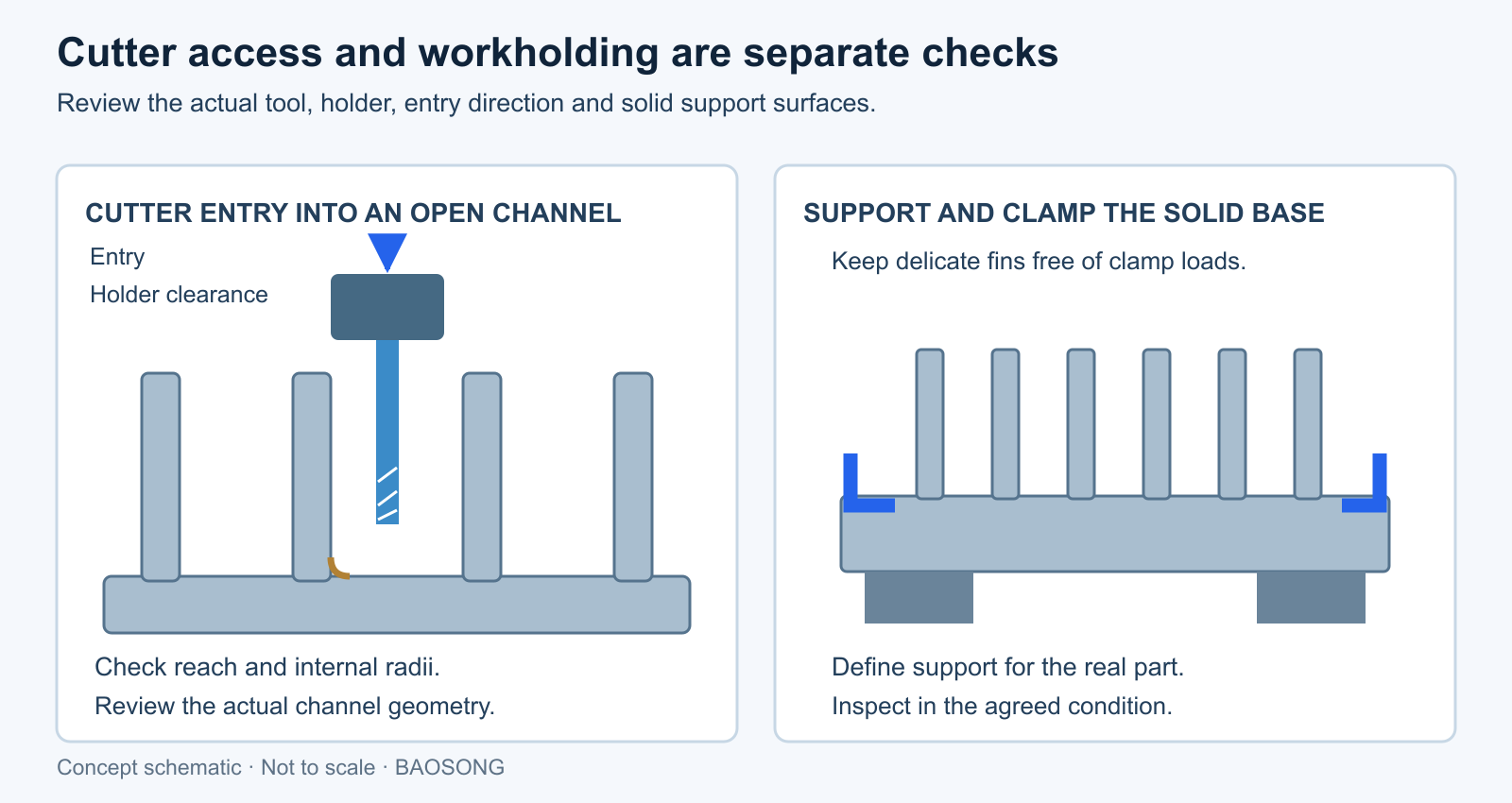
For a feature requiring another orientation, we plan the reference transfer between operations. Additional machine axes may improve access, but the cutter still needs room to reach and leave the feature. BAOSONG connects this review to the precision aluminum CNC machining route proposed for your component.
Define precision by contact zones and mounting relationships
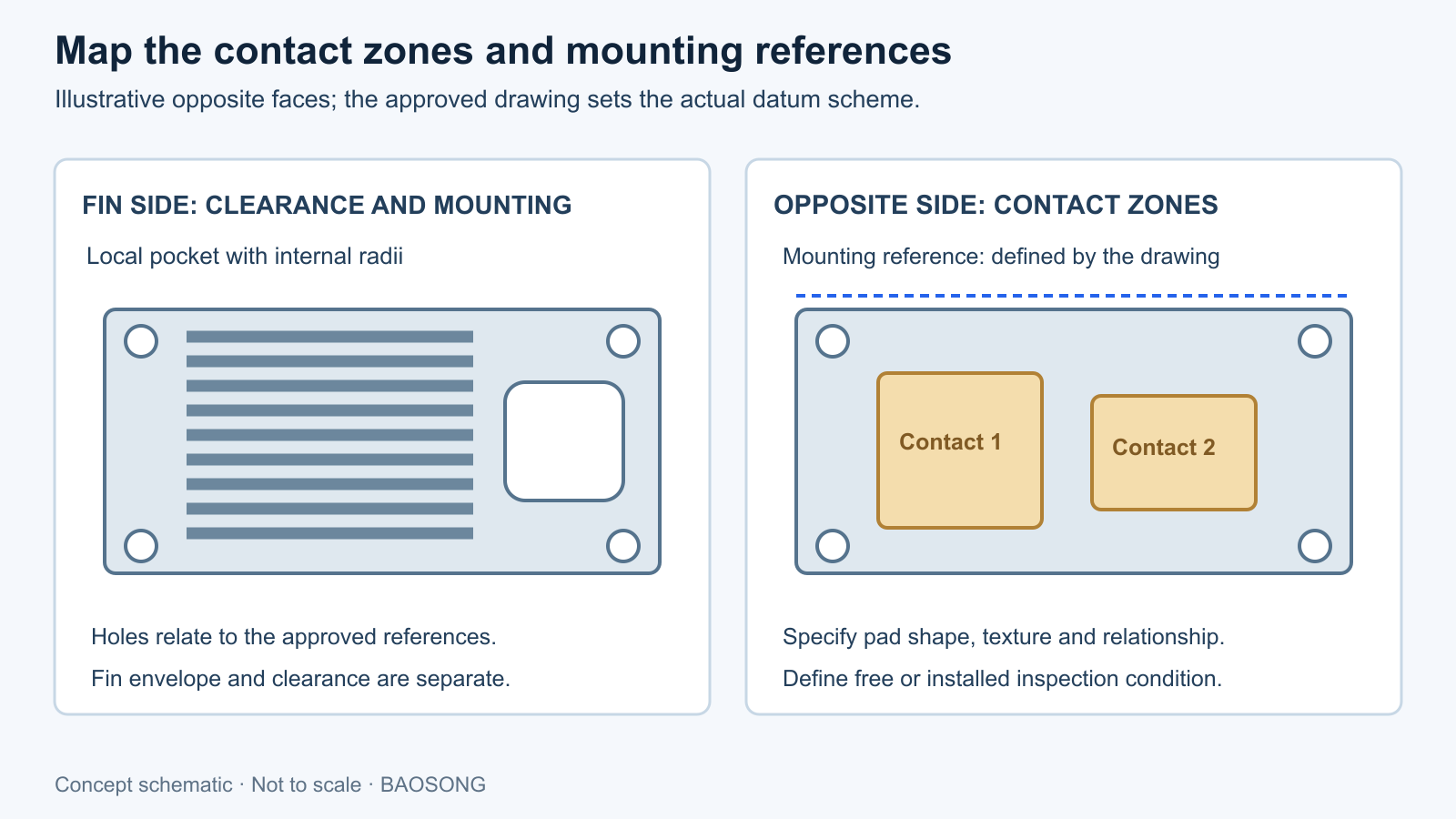
A precision aluminum heat sink needs inspectable functional requirements. Identify where heat enters the body, which surface locates the assembly and how the holes or stepped pads relate to that reference. A datum is the reference used to locate or measure a feature. We use the datum scheme on the approved drawing, or propose one for your approval when the design is still being developed.
Flatness describes the shape of a surface; surface roughness describes its texture. Neither alone specifies the relative height of separate pads or the position of mounting holes. BAOSONG reviews these requirements separately and identifies whether acceptance applies to the free part, a defined supported condition or the installed assembly.
Thermal interface material is the layer between the heat source and the heat sink. Alpha Novatech’s heat-sink selection guidance explains how it fills small interface gaps and how attachment affects material selection. We therefore coordinate the contact-surface requirement with the intended interface and mounting arrangement; a glossy surface alone does not prove a satisfactory thermal joint.
| Feature and function | Define in the approved requirement | BAOSONG manufacturing / acceptance action |
|---|---|---|
| Contact pad: transfer heat into the body | Contact footprint, required surface shape and texture, relative height and inspection condition. | Plan support and finishing for the specified area; provide the agreed contact-feature measurements. |
| Mounting holes: locate and secure the component | Reference surfaces, hole/thread requirements and relationship to the contact area. | Machine and check the pattern against the same approved mounting references. |
| Clearance pocket: avoid nearby components | Occupied envelope, clearance requirement, internal radii and remaining base geometry. | Check tool entry and holder clearance; raise any geometry change for approval. |
| Fin channels: provide the intended air path | Fin envelope, channel geometry and acceptable edge condition. | Retain or machine the appropriate blank features; check damaged fins, burrs and obstructions. |
| Electrical-contact or grounding area | Required conductive contact and specified coating or masking state. | Separate it from cosmetic finishing and verify the agreed final treatment. |
You can use these fields as a machining-release sheet. We help complete the functional requirements during review; you do not need to finish the sheet before contacting BAOSONG.
How we address the problems that cause assembly rejection
| Buyer problem | BAOSONG action | Customer outcome |
|---|---|---|
| One contact pad seats while another leaves a gap | Define the pad relationship, mounting condition and measurement reference; plan the machining and fixture around them. | An approved contact arrangement with measurable acceptance criteria. |
| Individual hole sizes pass, but the part will not assemble | Check position relative to the mounting and contact references, including thread and assembly access. | Evidence for the actual hole pattern and fit. |
| Fins are damaged during cutting or handling | Review support, cutter access, deburring and protective packing as part of the route. | The specified fin and edge condition is preserved through delivery. |
| A coating changes the fit or covers a contact area | Mark functional surfaces, agree masking and inspect the component in its delivered state. | Contact and fit requirements remain explicit after finishing. |
| Later orders differ from the approved part | Control drawing, blank, program, fixture and finish revisions; agree reapproval triggers before changing the route. | A repeat-order reference that includes the completed component. |
Anodizing can protect the surface, but its oxide layer is electrically insulating, as described in Hydro’s surface-treatment guidance. We specify conductive contact areas separately. Thermal-contact faces also receive their own finishing instruction, based on the approved interface design.
Keep CNC viable for production, and define when to change the route
Mass production can use CNC when the geometry and accepted-part cost justify it. BAOSONG plans the blank, reusable workholding, cutting sequence and inspection against the order pattern during quotation. A production decision includes the finished part and its records, not just the amount of aluminum removed.
For high-volume CNC machined heat sinks, we compare solid-stock machining with suitable preformed blanks where the recurring fin section makes that comparison worthwhile. There is no universal order quantity at which a new forming route becomes better. A proposed change must preserve the approved material and functional requirements, or clearly identify the changes requiring your approval.
Use this route-freeze record before repeat supply:
- Record the approved drawing and model revision, material specification, supply scope and order pattern.
- Identify the blank route, surfaces retained from the blank and surfaces created by machining.
- Record the functional references, machining/fixture release and delivered finish state.
- Agree first-article checks and the recurring records required for the contact, mounting and clearance features.
- Set change triggers: blank supplier or route, material state, fixture/reference scheme, program or finishing changes. Define what needs approval and reinspection.
For a supplier transfer, we compare the approved part and records with the proposed manufacturing route. We resolve missing references or conflicting revisions before first-article release. A new supplier does not automatically require restarting the customer’s entire thermal development program.
Separate manufacturing acceptance from installed thermal performance
First, accept the machined component against its drawing: material state, specified geometry, contact features, holes, edges and finish. Second, confirm installation fit with the agreed mounting references, clearances and interface items. Third, validate cooling under the project’s heat input, airflow or orientation, thermal interface and mounting conditions when required.
BAOSONG’s aluminum component inspection support identifies the manufacturing records included in the order. Thermal validation is assigned in the project scope, with the responsible party and acceptance condition agreed before release. A dimensional inspection report does not substitute for an installed cooling result.
If the part fails to seat, compare the contact and mounting references before prescribing a smoother finish. If dimensions pass but temperature remains unacceptable, check the interface and actual cooling conditions before changing the alloy. We use the observed failure to choose the corrective action and the checks needed after the change.
Two examples of choosing the right machining scope
A compact electronics unit with stepped contact geometry
Illustrative project, not a customer case: two heat sources occupy different heights and a nearby connector requires a local clearance pocket. No suitable preformed blank provides the required base geometry. We recommend machining from solid, establishing the pad relationship and mounting references together, then checking the installed interface against the approved design. The drawing controls the base and remaining material; we do not remove more material simply to make the component look lighter.
A repeat order with suitable straight fins and custom mounting
Illustrative project, not a customer case: the existing fin section meets established cooling conditions, but the customer needs a revised hole pattern and contact face. We recommend retaining the blank and changing the selective machining and inspection plan. Before repeat supply, we submit the revised features and finish requirements for your approval, then confirm them on the finished first article.
What BAOSONG delivers with your manufacturing proposal
As your CNC machined heat sink manufacturer and solution partner, we turn the drawing, sample or requirement into a route for finished-component supply. Our proposal addresses the decisions that affect fit, acceptance and reorders.
| Purchasing priority | BAOSONG deliverable | Value to your project |
|---|---|---|
| Budget and supply scope | Recommended blank and machining route, with tooling/workholding and finished supply requirements identified. | A quotation scope you can compare with the component you actually need. |
| Quantity and consistency | First-article and repeat-order plan covering approved revisions and change triggers. | A clear production reference for recurring orders and transfers. |
| Customization and process | Functional-feature review separating retained fins, machined interfaces and geometry changes for approval. | Customization where it improves fit, with unnecessary cutting avoided. |
| Quality support | Contact/reference/finish acceptance plan and agreed manufacturing records. | Inspection evidence for the interfaces that matter at assembly. |
| Delivery and handoff | Agreed documentation, handling, packing and release milestones. | Defined handoff from approved requirements to usable parts. |
For a new or changing geometry, our aluminum part design review brings these decisions together. For an approved design, we concentrate on manufacturing conformity and quotation, raising proposed improvements for your approval.
Questions before ordering a custom machined heat sink
Can CNC machining be used for repeated production?
Yes. CNC remains appropriate when the required geometry, order pattern and finished supply cost justify it. We review reusable workholding and the inspection route during quotation, and compare preformed blanks where they can retain the approved function with less recurring cutting.
Does a tighter flatness requirement always improve cooling?
Specify the contact requirement against the actual mounting and thermal interface. Flatness, texture, pad height and installation each describe different aspects of the joint. We define the relevant manufacturing checks and agree the assembly validation instead of treating one tolerance as a universal cooling guarantee.
What should I confirm when sourcing CNC machined heat sinks from China?
Use one approved drawing, model revision and material specification as the shared reference. Confirm the supplied state, process responsibilities, final inspection records, document language, protective packing and delivery terms. BAOSONG helps define this handoff so that the accepted component and recurring supply requirements remain clear.
How do I obtain a CNC machined heat sink quote?
Send your drawing, sample photo or requirements; BAOSONG will review the material, geometry, quantity, finishing and acceptance scope before issuing a formal quotation. Any one-time workholding or development scope is identified separately where applicable; pricing is not calculated automatically online.
Start with the information you already have
| Your starting point | BAOSONG’s next action | What you receive |
|---|---|---|
| Approved drawing or CAD | Review tool access, functional features, material state and acceptance requirements. | A manufacturing proposal and quotation against the approved design. |
| Sample or photos of an existing component | Identify the information needed for reproduction and any proposed improvements. | A defined replication or improvement route. |
| Sketch, layout or cooling requirement | Recommend the blank and machining approach; develop the contact and mounting decisions with you. | A proposed component scope and next development steps. |
| Supplier-transfer or repeat-order requirement | Compare the accepted part, revisions and records with the proposed production route. | A transfer or reorder plan with first-article and recurring checks. |
Discuss your CNC machined aluminum heat sink project with BAOSONG. Share the information available now; we will recommend the route and help complete the requirements needed to manufacture and deliver the part.