
Quick answer: custom aluminum robot arm links
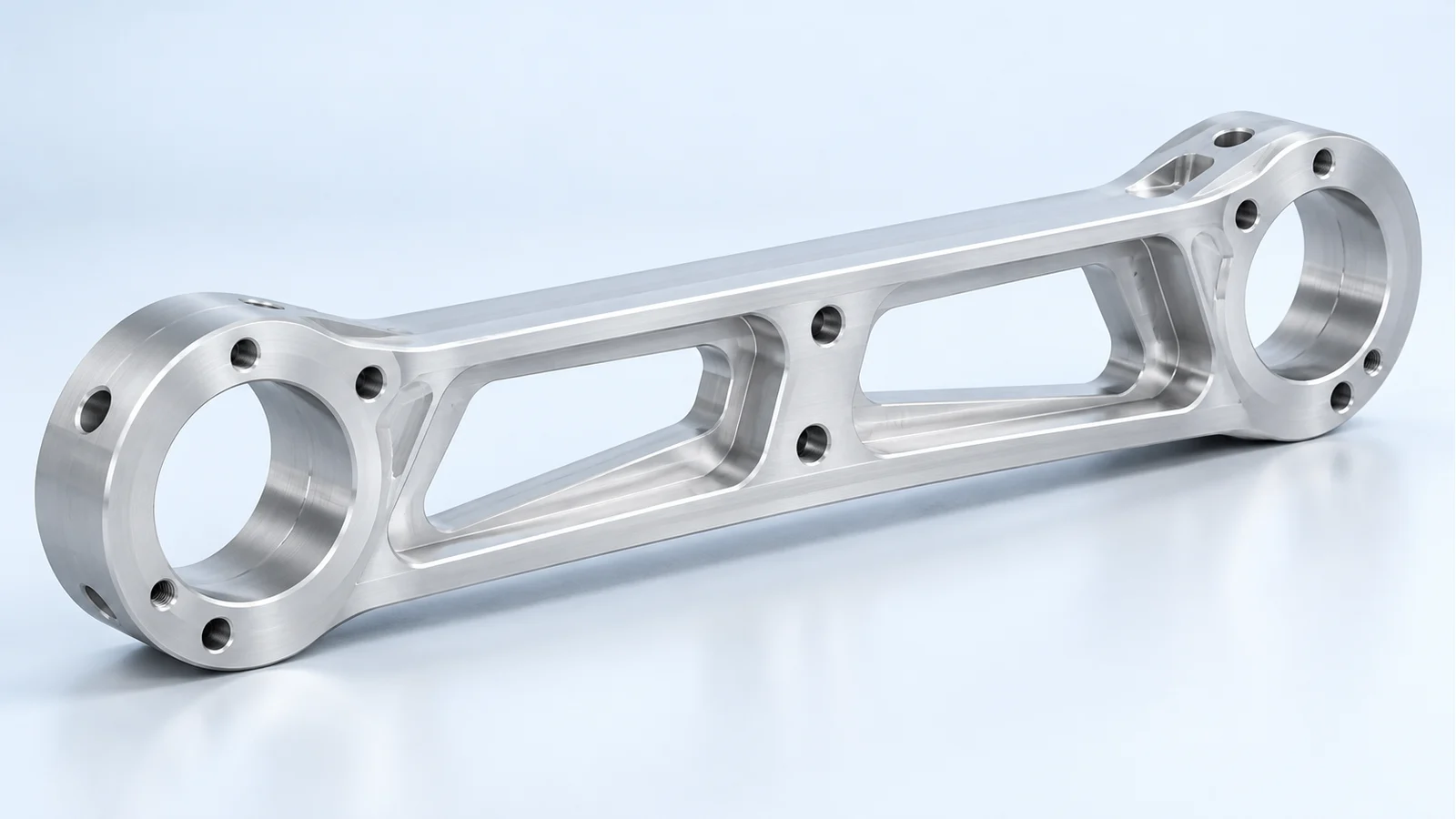
BAOSONG manufactures custom aluminum robot arm links with the section and both joint interfaces planned together. We recommend a machined one-piece body for changing end geometry or suitable recurring orders. For a stable hollow section, we compare extrusion plus machined ends; complex repeated geometry can justify a cast blank with critical interfaces finish-machined.
Aluminum helps control moving mass while providing manufacturable pockets, ribs and cable access. We preserve support around the joint attachments and connect it through the required load path. The finished link must meet its geometric definition and the product’s structural requirements.
Send your link drawing, arm layout, sample photo or stiffness and assembly problem. We will recommend the construction and manufacturing route, identify the interface decisions and define the quotation scope. Request your aluminum robot arm link proposal and quote.
At a glance: match the construction to the link
| Project condition | BAOSONG recommendation | Decision to settle |
|---|---|---|
| Joint interfaces are changing | Use a one-piece machined body with accessible end features. | Latest mating geometry and two-end locating relationship. |
| Stable, largely constant hollow section | Compare extrusion plus CNC end features. | Section stiffness, end attachment and stock consistency. |
| Stable curved body with repeated demand | Review a cast blank and machined functional interfaces. | Tooling exposure, blank quality and critical allowances. |
| Long section or service access needs separate ends | Compare a joined section/end construction. | Joint stiffness, locating stack and retention. |
| Approved link drawing or transfer order | Proceed directly to manufacturing and acceptance review. | Finished state, inspection method and repeat-supply baseline. |
The link connects joints as a structural component
Our aluminum hardware for robotics and automation includes structural parts at different positions in the motion assembly. A robot arm link is the load-carrying segment between joint interfaces. It maintains their intended relative position while providing space for the specified mechanisms, wiring or service access. A robot arm structural component may be a single machined link, a hollow segment with end attachments or an agreed mechanical assembly.
BAOSONG supplies these structural parts within an aluminum robot arm. Motors, reducers, controls and the complete powered arm are separate supply scopes. The robot joint housing locates its internal mechanism; the arm link connects the relevant joint assemblies over a span. Their interfaces must agree, but they are different parts.
Reduce mass where the structure can afford it
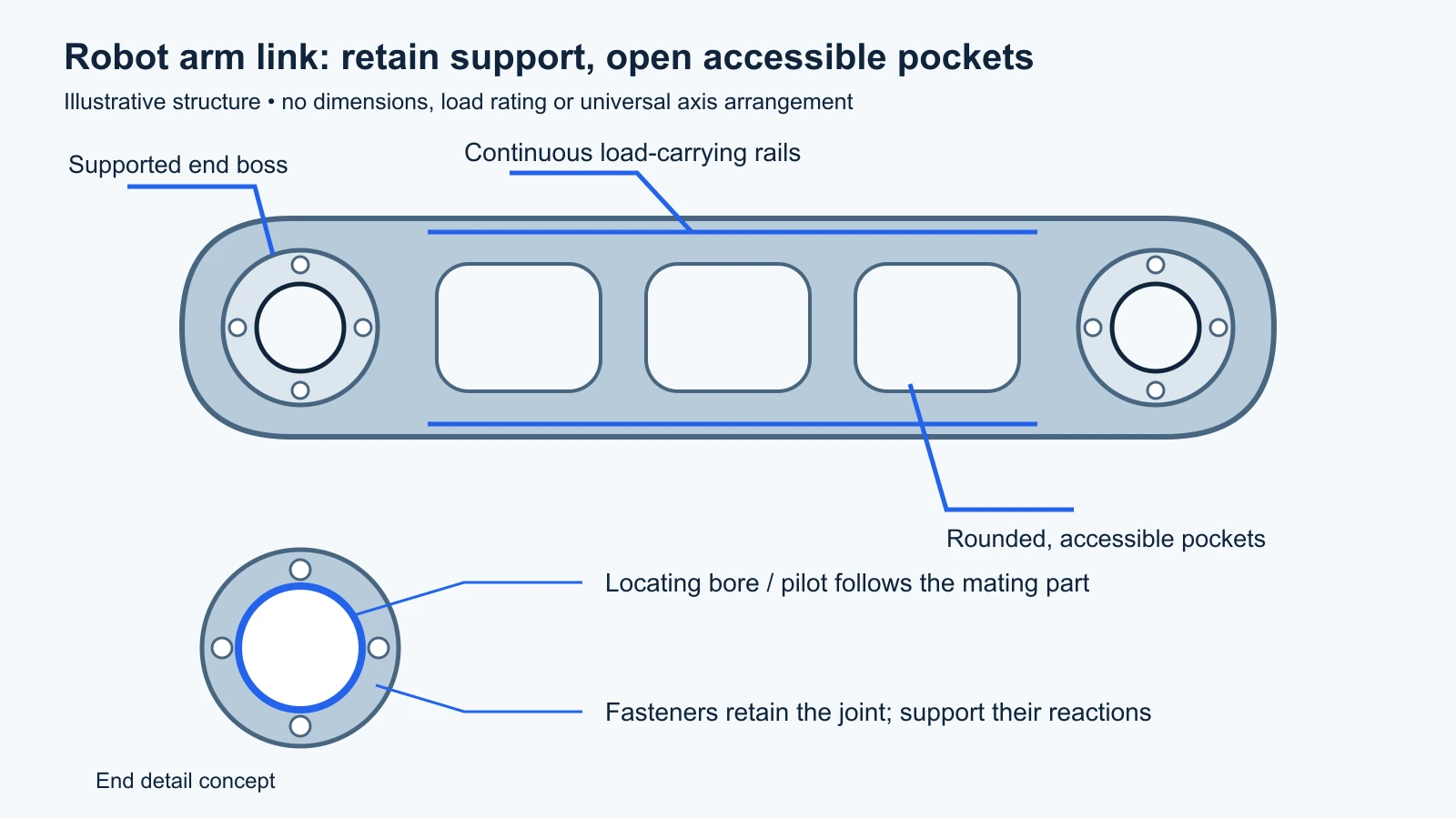
Start with the link’s operating load cases and allowed movement, then identify where the section carries those loads. Keep support around joint bosses, bearing or pilot regions, fastener reactions and abrupt changes in section. Place weight-reduction features where they preserve the required bending and torsional behavior and remain practical to manufacture.
Lightweight robot arm parts need an agreed mass and stiffness envelope. Mass distribution, acceleration, mounting orientation and the surrounding joint compliance also influence system behavior. Removing the same amount of material from different locations can produce different structural and dynamic results. We recommend the section and pocket layout against the specified cases instead of promising a speed or payload increase from weight alone.
Manufacturing constraints belong in the structural review. Ansys’s topology-optimization example combines loading cases, minimum material thickness and a separate validation study. For your link, we identify the section, tool-access and structural confirmation requirements together. An optimized shape still needs a manufacturable definition and validation under the actual operating cases.
Why choose an aluminum link construction?
Aluminum supports a low-mass link with features that can be machined or integrated into a suitable blank. Mounting bosses, cable passages and pockets can be coordinated within the main structure, reducing the need to attach every feature separately. A stable hollow section can offer a useful extrusion route, while a changing interface can remain economical to machine repeatedly.
For a pocketed link machined from plate, we recommend evaluating 6061-T651 as a practical starting candidate. Specify the plate condition and applicable purchasing standard together, then check the actual load, fatigue, corrosion and finish requirements. Kaiser’s 6061 sheet and plate data distinguishes material conditions and processing characteristics; it is a material reference, not a finished-link performance rating.
If the accepted design is deflection-limited, we first improve section depth, rail continuity and joint support rather than simply requesting a higher-strength grade. If local strength, fatigue or environment controls the design, we compare another approved material and stock form. For a stable hollow extrusion, the material decision is made with the profile supplier’s section and condition data. Your approved material stays unchanged unless you authorize an alternative.
Define the relationship between both ends
Map the locating bore or pilot, mounting face, bolt pattern and clocking feature at each end. Determine which features establish the joint axis and which only provide clearance or retention. Then define the required end-to-end location and orientation in a functional datum system, meaning the references that reproduce how the link is located in assembly.
The two joint axes may be parallel, offset, intersecting or arranged otherwise. They do not automatically need to share one axis. BAOSONG plans machining and inspection around the specified relationship, including the interfaces through which separate housings, bearings or carriers attach.
Control the properties that affect that assembly. Bore diameter, bore form, face orientation and hole location answer different questions. A convenient outside surface may help hold a rough blank without being the final acceptance datum. Clear functional references let us concentrate machining effort where it protects the assembled geometry.
Choose the blank first, then define any separate end pieces
We recommend an integral machined body when it gives direct access to evolving end features and a practical route for the order. Stable sections or complex repeated bodies deserve a comparison with an alternative blank. The comparison includes finishing, interface machining, inspection and the cost of any additional connections.
| Route and fit | Benefit and tradeoff | Change trigger / verification |
|---|---|---|
| One-piece CNC-machined link | Flexible end geometry, pockets and mounting details. Material removal and tool access can dominate the work. | Retain for suitable repeat supply. Change when a stable section or blank demonstrably reduces accepted-part work. |
| Extruded section plus CNC | Useful for a repeated hollow section with machined ends. Section limits and end load introduction need review. | Select for a practical constant section. Verify completed end geometry and representative stock/finish. |
| Cast blank plus critical machining | Integrates suitable curved walls, ribs and bosses. Adds tooling, blank-quality and allowance requirements. | Use for a stable geometry and order plan. Verify internal-quality requirements and finished interfaces. |
A joined end piece is an architecture choice, not a fourth blank process. It can be machined and attached to an extruded or otherwise manufactured span. We favor an integral end when it keeps the load path short and assembly access practical. We propose a separate end when interchangeability, long-part access or repair gives a clear benefit; the proposal then defines its locating shoulder or other register, fastener access, load transfer and assembled acceptance. Bolt clearance alone should not determine the joint position.
Our precision aluminum CNC machining connects the selected blank to its joint interfaces. CNC machining can support recurring supply; it is not restricted to a prototype step before some other mandatory production process.
Reserve cable and service space before machining pockets
Review the cable path through the intended joint movement, with installation and replacement access. A passage that looks clear in a static model can still place wiring near a moving edge or a fastener. Identify the product-specified bend and clearance requirements, and keep the passage separate from the material needed for joint support.
For an internal feature that cannot be reached, deburred or checked reliably, we propose a revised opening, cover or split construction. A smaller access window is not useful if it forces an unstable tool or traps chips near the mechanism. The construction recommendation includes how the customer will assemble and service the link.
Plan support and datum transfers for the long part
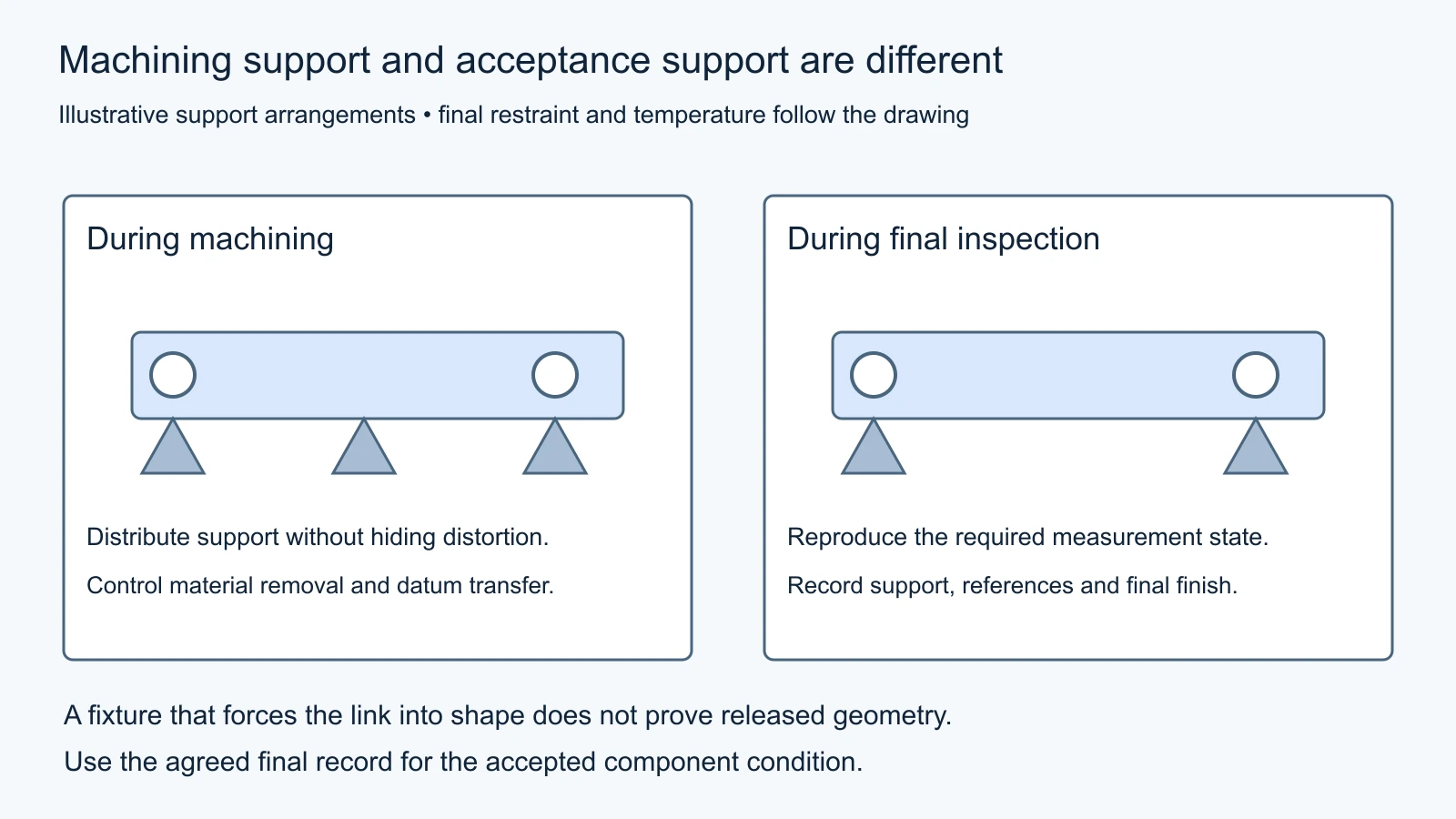
A long, pocketed link can move under clamping and cutting loads. BAOSONG plans the material-removal sequence, support lands and critical-feature finishing together. Related end features are machined through a controlled locating sequence; fewer datum transfers help only when access and support remain suitable.
Distinguish the machining fixture from the required measurement condition. Distributed workholding can support the blank during cutting, but final acceptance must use the free, restrained or assembled state on the drawing. A fixture that forces the ends into position does not establish their released relationship.
We identify how the second orientation re-establishes the functional references and which features need final verification. In-process checks help control the setup; they do not replace the agreed finished-part record. This makes a drawing requirement usable in both the manufacturing plan and the acceptance report.
Protect the functional interfaces through finishing
Define the finished condition for pilots, bearing seats, mounting faces, threads, grounding points and visible surfaces. Mask or subsequently machine the relevant zones according to the approved specification. Coordinate edge treatment around cable passages and insertion paths with cleanliness and handling requirements.
Our aluminum surface-finishing options support that functional zoning. Packaging should protect long interfaces from handling damage and keep parts identified by revision. An attractive outside finish does not replace the specified condition of a locating surface.
How BAOSONG resolves link manufacturing problems
| Customer problem | BAOSONG action | What you receive |
|---|---|---|
| Weight pockets weaken a joint attachment | Review load introduction and preserve support around bosses and fasteners. | A targeted pocket/section recommendation. |
| Each end measures well but the assembly does not align | Review the two-end datum relationship and the inspection references. | A functional feature map and matching measurement plan. |
| The link changes shape after unclamping | Review removal sequence, support and the required acceptance state. | A manufacturing route that addresses released geometry. |
| Internal wiring is difficult to install or replace | Check passages, moving clearances and access with the assembly layout. | A serviceable access or construction proposal. |
| A repeat supplier changes the blank or finish | Compare the affected interfaces and structural assumptions with the baseline. | A defined change review and confirmation scope. |
Have a link that twists, moves after machining or is difficult to assemble? Send BAOSONG the layout or a photo of the problem. We will identify the joint-support, pocketing and locating changes worth reviewing and connect them to a manufacturing proposal.
Separate component inspection from structural validation
BAOSONG defines the inspection scope for the supplied link, with the controlling drawing, material, finish and support state. Our component inspection planning connects each critical feature to an agreed method and record. NIST’s dimensional-calibration publication explains why a measurement is an estimate with uncertainty; the method must be suitable for the actual acceptance decision.
| Question | Condition and record | Evidence boundary |
|---|---|---|
| Are the joint interfaces correctly related? | Drawing datums, both-end features, temperature and stated restraint; dimensional record. | Separate size, form, position and orientation as required. |
| Is the delivered link consistent with the material definition? | Specified alloy/condition, blank route and traceability. | Material identity alone does not establish fatigue or motion performance. |
| Will the section meet the operating case? | Approved loads, supports, deflection/dynamic targets and validation plan. | Analysis and structural testing are separate from a dimensional report. |
| Are access and finish ready for assembly? | Cable/fastener paths, edges, cleanliness, coating/masking and handling. | Check the supplied finished state and representative assembly. |
| Can the order be repeated? | Intended blank, machining, fixtures, finish and inspection revision. | Use a representative first article and controlled change approval. |
Two practical OEM starting points
Illustrative new forearm segment. A robot team has a compact layout with changing end interfaces and internal wiring. We recommend a one-piece machined link with accessible pockets and supported joint regions. We deliver a construction and machining proposal that prioritizes the end definition, mass/stiffness requirements and cable access before unnecessary dimensions are tightened.
Illustrative repeat link with a stable hollow section. The accepted body has recurring demand and limited variation along its span. We compare an extruded blank with the existing machined route, including end operations, material condition, finishing and the accepted interface relationship. The proposed change proceeds only with the customer’s approval and the necessary confirmation of the finished component and assembly.
Keep repeat links consistent with the accepted design
For high-volume robot arm link supply, establish the intended blank and manufacturing route during quotation. A representative first article uses that route, finish and inspection condition. Robot arm link mass production depends on a controlled baseline, not simply repeating a program from a differently supported development sample.
Review changes to section geometry, pockets, connection details, material condition, finish or locating method against their effects. Some changes alter the mass distribution or structural behavior while leaving the part’s outside envelope unchanged. BAOSONG identifies the affected checks and keeps the accepted configuration clear for subsequent orders.
Why choose BAOSONG for your arm links?
| Your priority | BAOSONG action | What you receive |
|---|---|---|
| A useful lightweight structure | Connect joint support, section and required operating cases. | A reasoned construction and pocketing proposal. |
| Both ends ready to assemble | Plan functional references, end operations and transfers. | A critical-feature map and machining approach. |
| Access that survives real assembly | Review tooling, cables, covers and removal paths. | A practical manufacturing and service handoff. |
| Consistent recurring parts | Coordinate blank, finish, measurement state and change review. | An accepted first-article and repeat-supply baseline. |
We translate the link requirement into a component manufacturing proposal that engineering and purchasing can use together. An approved drawing can go directly to quotation review; a layout or existing-part problem is enough to start defining the next step.
Request an aluminum robot arm link quote
BAOSONG provides a formal quotation after reviewing your drawing or requirements, supplied-part scope, material, joint interfaces, finish, quantity and inspection needs. Send the information you have, and we will help clarify the remaining quotation conditions.
Frequently asked questions
What should I compare when sourcing a robot arm link from China?
Use the same revision, blank/material condition, finished interfaces, included assembly work and quantity. Agree how the two ends are measured and which structural confirmation is in scope. A raw blank price does not describe a completed and accepted link.
Can we use an existing link as the starting point?
Yes. A sample, mating-part drawing and description of the problem can start the review. We identify the locating features separately from wear, damage and cosmetic surfaces, then propose the dimensions and material checks needed to create an approved manufacturing definition. That avoids reproducing a worn interface as if it were the intended size.
How should repeatedly serviced threads or locating surfaces be handled?
Where repeated removal is wearing an interface, we recommend evaluating a replaceable thread insert, bushing or separate end feature while retaining the lightweight aluminum body. The choice follows the mating load, available wall and repair access. The proposal specifies how the insert is retained and located; a replaceable element is useful only if the surrounding joint remains adequately supported.
Can one link design serve several robot reaches?
Use a common end interface where the mating joint allows it, but review each span and section as a structural variant. A longer link changes leverage, mass distribution, cable routing and deflection even if the bolt pattern stays the same. We can organize shared interfaces and variant-specific manufacturing definitions so purchasing can reuse the suitable features without treating every reach as an identical part.
Send a drawing, layout or existing link problem
| What you have | BAOSONG next action | What you receive |
|---|---|---|
| Approved link drawing | Review blank, end features, finish and acceptance directly. | A drawing-based quote and proposed deviations. |
| Early arm layout | Recommend construction and prioritize joint/cable/structural inputs. | A component proposal and next engineering decisions. |
| Existing link or assembly issue | Review end relationships, support and delivered state. | A targeted improvement plan. |
| Transfer or repeat-production request | Compare the approved component and process baseline. | A representative first-article and supply proposal. |
Discuss your custom aluminum robot arm links with BAOSONG. Send a drawing, sample photo, layout or short description of the problem.