
Quick answer: what makes an EV inverter housing ready for manufacture?
BAOSONG develops and manufactures custom aluminum EV inverter housings around the power module, cooling arrangement and electrical interfaces. For stable, complex recurring geometry, we recommend a cast body with CNC-finished functional surfaces when the tooling and qualification are justified. For an evolving layout or compact, accessible housing, a machined body can avoid premature tooling commitment and remain a production route when the order economics support it.
Our first design decision is the cooling boundary: does the module sit on a closed cooling base, or does its baseplate seal directly into a coolant cavity? That choice changes the mounting surface, sealing arrangement and inspection scope. We coordinate those features with the cover and connector locations so one accepted interface does not compromise another.
Send a drawing, module layout, sample photo or short description to BAOSONG. We will recommend a construction, define the mechanical delivery scope and identify the interfaces to release for quotation. Approved designs move directly into manufacturing review; early layouts receive a focused proposal for the next design step.
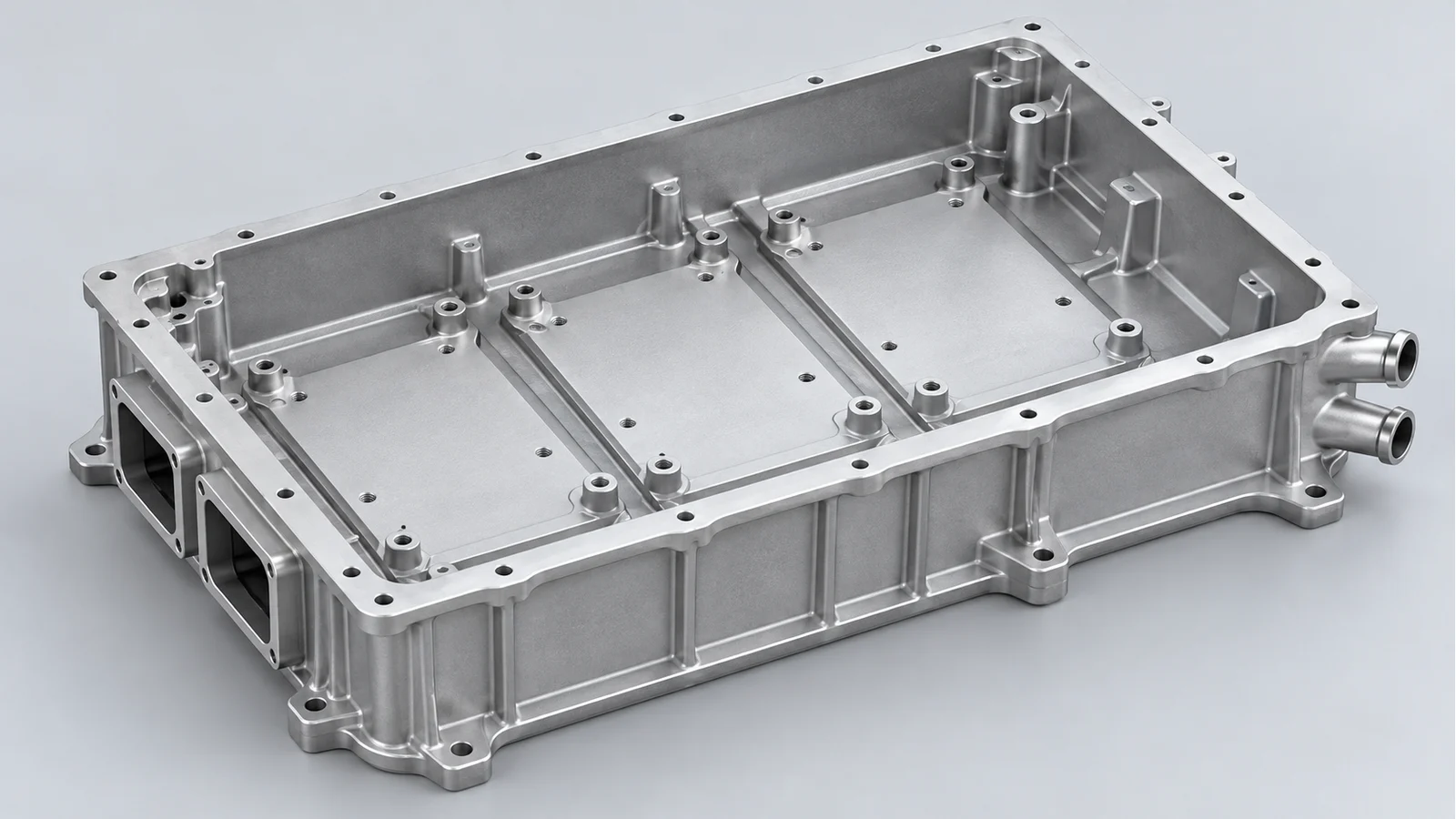
EV inverter housings at a glance
| Your project condition | BAOSONG recommendation | Release decision |
|---|---|---|
| Stable complex housing with recurring demand | Cast body with local CNC finishing, subject to the project tooling review | Tooling scope, material condition and critical cast/machined features |
| Layout still changing or tooling is not justified | Machine the body or the functional base and cover | Tool access, stock use and accepted development/production differences |
| Module seals directly into coolant | Develop the module seat, gland and cavity together | Module-specific mounting instructions and complete fluid boundary |
| Module sits on a closed cooling base | Coordinate contact surface, interface material and fastening | Thermal contact and cooling-base acceptance as separate functions |
| Housing fits before coating but not after | Release masked/finished interfaces before treatment | Which faces remain conductive, sealed or dimensionally controlled |
Define the housing you are buying
An EV inverter housing is the mechanical enclosure that supports and protects the vehicle traction inverter electronics. BAOSONG can supply the body, cover, cooling-interface components or an agreed mechanical assembly. The proposal identifies which joints, ports, seals, finishing and inspection belong to that delivery; populated electronics and vehicle-level inverter approval remain separate scopes.
An aluminum inverter housing can combine a low-mass enclosure with machined module seats, connector interfaces, mounting bosses and a useful heat-conduction path. The value comes from placing those features where the system needs them. We choose the alloy and product form with the geometry, joining and cooling construction, rather than assuming a billet alloy and a casting alloy are interchangeable.
The electric vehicle inverter enclosure also needs usable assembly access. A connector may fit its opening yet leave insufficient access for a seal, fastener or harness operation. We review the connector installation direction and module fastening sequence before releasing the cavity and sidewall machining. An on-board charger housing and a motor housing are different purchase objects, even when some manufacturing methods are shared.
Choose the manufacturing route around the functional housing
For a die cast inverter housing, our recommendation is to define the casting and finish-machining requirements together. Keep complex ribs and bosses in the near-net body where suitable, and reserve the necessary stock and access for module seats, sealing features and connector interfaces. Casting integrity near a machined fluid boundary needs an agreed inspection approach; machining accuracy alone cannot establish pressure tightness.
| Construction | Use it when | Tradeoff or change trigger | What BAOSONG releases |
|---|---|---|---|
| Cast body plus CNC finishing | Complex repeated geometry can justify dedicated tooling | Tooling, casting integrity and critical-feature access must be addressed. Reconsider before the module or connector arrangement is stable. | Cast/machined feature map, stock allowance and acceptance scope. |
| Machined body or base-and-cover set | Geometry is accessible and flexibility or low tooling commitment matters | Material removal and tool reach can dominate. Compare a near-net body when stable demand and geometry justify the change. | Datums, cavity support, surface state and inspection plan. |
| Separate cooling base with an outer enclosure | Thermal functions can be concentrated in a base while the cover/case provides protection | Extra joints and tolerance chains need control. Reassess if the architecture requires a highly integrated fluid boundary. | Base-to-case relationship, joint/seal scope and assembly references. |
Our precision aluminum CNC machining review examines how the functional surfaces can be reached and related across setups. A slender sidewall or module floor may need support during roughing and finishing. We plan that support and the operation sequence before the final faces are cut, especially where a later closure or coating changes access.
Decide between a closed cooling base and direct module cooling
With a closed cooling base, the power module sits above a solid wall. The thermal contact surface, any specified thermal interface material and the fastening arrangement must work together. We recommend releasing the actual contact area and surface condition against the selected module instructions; a good-looking flat area outside that footprint does not prove the required contact is achieved.
With direct module cooling, part of the module baseplate forms a wall of the coolant circuit. The housing must locate and support the module while sealing around the exposed cooling region. The gland, seal material, cavity clearance and fastening conditions follow the chosen module and system requirements. The coolant path should also avoid unintended bypass around the active cooling structure.
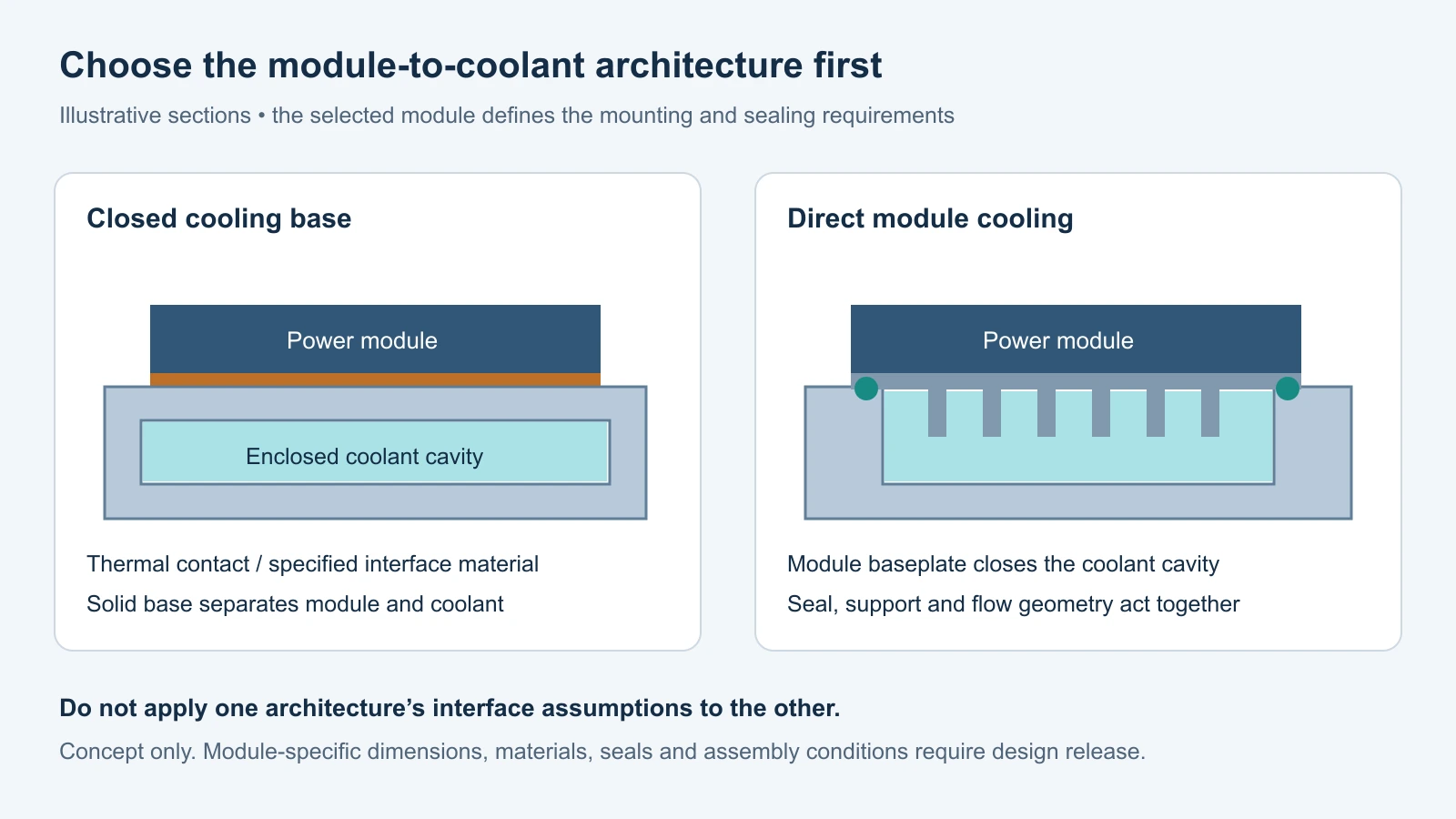
Infineon’s HybridPACK 2 mounting instructions illustrate why the module architecture matters: that particular pin-fin module seals into a liquid-cooling arrangement and does not require thermal grease at that interface. We use the specified module documentation to develop your housing interface; its dimensions or mounting values must not be transferred to a different module.
Coordinate module, connector and seal references
We recommend a functional interface map covering the module mounting region, connector openings, cover seal and vehicle attachments. Each feature is related to the agreed drawing references, machining state and finished condition. This prevents separately correct dimensions from producing a housing that forces the board, module or connector into an unintended position.
Thermal contact and electrical insulation are different requirements. The module supplier and electrical design determine insulation, clearance and creepage needs; the housing geometry must preserve the allocated space through manufacturing and assembly. Fasteners, washers, burrs and finish build-up belong in that review when they approach the defined electrical interfaces.
Conductive aluminum walls can support the enclosure’s shielding strategy, but joints, connector penetrations and contact surfaces affect the assembled result. We identify bonding or contact lands before finishing and specify the intended surface condition. Fabricated covers and enclosure components are coordinated with the base so the mating joint and access remain manufacturable.
How BAOSONG resolves common inverter housing problems
| Buyer problem | BAOSONG action | Why it matters | Output |
|---|---|---|---|
| Module fit conflicts with a connector or cover | Review the interface map and assembly sequence together | One reference relationship controls the interacting features. | Released feature and access review. |
| Fluid leakage appears after final machining | Review casting/closure integrity and test the specified finished boundary | An accurate machined surface cannot eliminate every material or joint leak path. | Boundary-specific inspection and test scope. |
| Coating changes contact or seal behavior | Identify masked, conductive and sealed areas before treatment | Finish state becomes part of the interface definition. | Finish/masking drawing and acceptance state. |
| A development part passes but the cast body differs | Identify changed alloy, wall, joint and process conditions | Only relevant evidence transfers to the changed construction. | Change-impact and representative-part release. |
Inspect the delivered housing and the correct test boundary
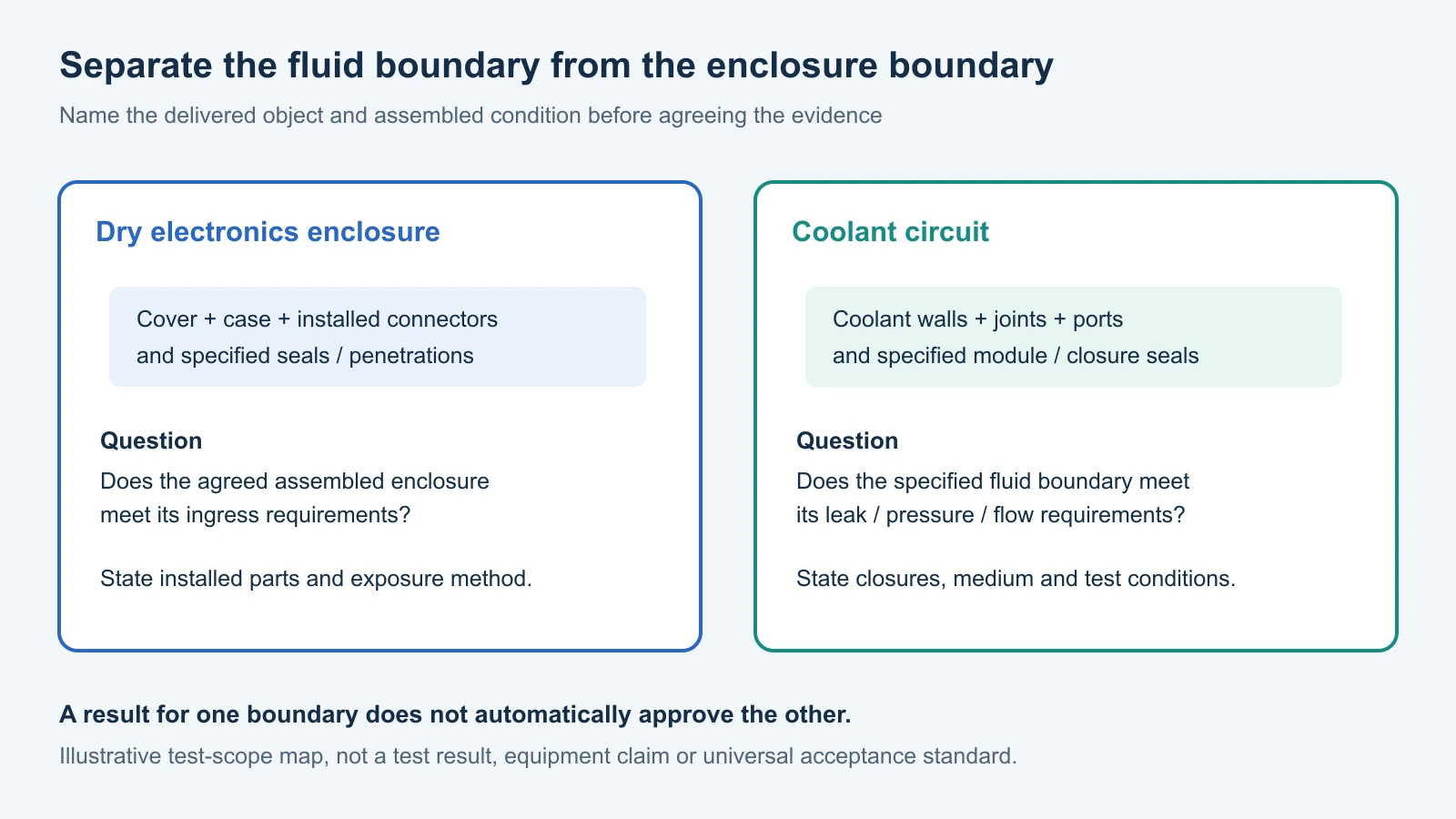
A coolant circuit leak test and a dry electronics cavity ingress assessment answer different questions. State whether the test object is the bare body, a body with temporary closures, the joined cooling base, or the complete mechanical enclosure. Include the ports, seals and joints that are part of that object; an excluded cover or connector cannot be assumed approved by the result.
| Feature or boundary | Define before production | Evidence to agree | Recheck after |
|---|---|---|---|
| Module mounting interface | Actual footprint, references, surface requirements and support state | Dimensional/surface record for the specified condition | Module, base construction or machining change |
| Coolant circuit | Material compatibility, closures, ports, test method and acceptance conditions | Specified leak/pressure/flow evidence where required | Joint, wall, seal, material or port change |
| Cover and connector enclosure | Installed sealing components and relevant ingress requirements | Agreed assembled-boundary assessment | Cover, connector, gasket or finish change |
| Electrical contact and cleanliness | Contact lands, masking, deburring and cleanliness requirements | Agreed feature/cleanliness inspection | Finishing, cleaning or assembly-process change |
BAOSONG connects these records to the agreed quality and inspection plan. The component report identifies the revision and delivered state. Thermal, electrical, EMC and vehicle-level approvals require the specified assembled configuration and assigned validation scope; a housing dimensional report is not a substitute for those evaluations.
Move into mass production without losing the approved interfaces
For mass production, release the body construction, material condition, critical machining, finish/masking and inspection baseline together. A billet development housing can resolve packaging and local interface fit. If the production route changes to casting, we identify which wall behavior, material properties, fluid boundaries and manufacturing evidence need renewed approval.
An approved build-to-print design can proceed directly to quotation and manufacturing review. A transferred part needs the drawing, sample and accepted inspection basis reconciled. For an evolving layout, BAOSONG proposes a representative body or feature trial only where it resolves a defined issue; a prototype is not an obligatory step for every order.
Repeat orders use a change-impact record connecting the changed feature to its functional requirement. A relocated connector, coating revision or different closure method may affect more than the edited dimension. We agree the affected checks and release revision before the change enters continuing supply.
Why choose BAOSONG for a custom EV inverter housing?
BAOSONG brings the manufacturing route and the housing’s interacting interfaces into one drawing and manufacturing review. You receive a component supply proposal that explains how the module, cooling construction, cover and connectors will be controlled through the delivered condition.
| Purchasing priority | BAOSONG action | What you receive |
|---|---|---|
| One workable mechanical scope | Define body, cover, cooling interfaces, joining and finishing | A comparable proposal matched to the delivered assembly. |
| Reliable assembly fit | Coordinate functional references and access across operations | An interface map and critical-feature inspection basis. |
| Useful validation evidence | Separate coolant and enclosure test objects and conditions | A release plan that says what each result demonstrates. |
| Repeat supply after design changes | Maintain the accepted revision and change-impact checks | A traceable baseline for first supply and recurring orders. |
Request an EV inverter housing quote
BAOSONG prepares a formal EV inverter housing quote after reviewing the drawing or requirements, material, quantity, tooling and agreed inspection scope. Send your current information and we will define the mechanical supply and remaining decisions needed for accurate pricing.
EV inverter housing manufacturing questions
Can CNC machining be used for production housings?
Yes. CNC machining can be a recurring production route when the geometry, stock use, cycle time and order requirements support it. We compare that route with casting or a separate functional base using the full delivered scope, rather than assuming every machined housing must eventually become a casting.
Does every power module need thermal grease against the housing?
No. The answer depends on the module and cooling architecture. A closed-base arrangement may specify a thermal interface material, while a module designed to seal directly into coolant has a different interface. BAOSONG develops the housing around the selected module’s mounting and cooling requirements.
What should an OEM compare when sourcing an inverter housing from China?
Compare the same drawing revision, alloy and product form, cast versus machined features, finish state and test object. BAOSONG identifies the delivered components, accepted interfaces and records accompanying first supply so your purchasing, engineering and receiving teams compare the same scope.
Start with the information you already have
| What you have | BAOSONG does next | What you receive |
|---|---|---|
| Released drawing and quantity | Review route, interfaces, finish and acceptance | Manufacturing proposal and formal quote scope. |
| Module drawing and packaging layout | Develop the housing and cooling-boundary direction | A coordinated interface plan for the next revision. |
| Sample or assembly problem photos | Identify the conflict and the information needed to characterize it | Focused manufacturing review and proposed changes. |
| Existing source or production transfer | Reconcile drawing, sample and accepted records | First-supply and change-control handoff. |
Request your custom EV inverter housing proposal and quote. Send a drawing, sample photo, layout or short description. BAOSONG will turn the module, cooling and enclosure interfaces into a defined manufacturing plan for your aluminum EV component project.